GOOD FRIDAY HOMILY
THEME: “THE CROSS OF JESUS: SIN, SUFFERING AND DEATH RECYCLED”
READINGS: Isaiah 52:13-53:12; Hebrews 4:14-16;5:7-9 and John 18:1-19:42.
INTRODUCTION: FROM WASTE TO WORTH
In our modern world, we have learned the importance of recycling — taking what is discarded, useless, even harmful, and transforming it into something new, beautiful, and beneficial. Plastic waste becomes furniture; scrap metal becomes tools; old materials are given new purpose.
Recently, for instance, from some waste materials in Agbogbloshie (Accra), one Iddrissu Salifu made a cross which has attracted the attention of even Pope Leo XIV. It is this story which has inspired the theme of this Good Friday homily: “The Cross of Jesus: Sin, Suffering and Death Recycled”.
God is the greatest “Recycler.” On the Cross of Jesus, sin, suffering, and death —humanity’s greatest “waste products” — were not discarded but transformed into instruments of salvation.
- SIN RECYCLED INTO MERCY AND FORGIVENESS
The Cross of Jesus is the place where the full weight of human sin is laid bare. Betrayal, denial, injustice, hatred — these are all present in the Passion narrative (cf. John 18:1–19:42). Yet instead of responding with condemnation, Jesus transforms sin into mercy.
Isaiah prophesied: “He was pierced for our transgressions… and by his wounds we are healed” (Isaiah 53:5). What humanity intended for evil, God transforms into forgiveness. Even as He hangs on the Cross, Jesus prays: “Father, forgive them; for they do not know what they are doing” (Luke 23:34).
Sin, which should have separated us from God forever, is “recycled” into an opportunity for reconciliation. Through Christ’s sacrifice, sin becomes the very place where God’s mercy shines most brightly. So, no sin is beyond redemption when surrendered to the Cross.
- SUFFERING RECYCLED INTO REDEMPTION AND COMPASSION
Suffering is often seen as meaningless, something to be avoided at all costs. Yet on the first Good Friday, suffering was given a new meaning.
The Letter to the Hebrews tells us: “He offered prayers and supplications with loud cries and tears… and he learned obedience through what he suffered” (Hebrews 5:7–8). Jesus did not eliminate suffering; He entered into it fully. In doing so, He transformed suffering from a curse into a path of redemption. Thus, Isaiah declared: “Surely he has borne our infirmities and carried our diseases” (Isaiah 53:4).
Now, suffering is no longer wasted. United with Christ, it becomes redemptive, a participation in His saving work. It becomes a source of compassion, drawing us closer to God and to one another.Therefore, when united with Christ, our suffering is not meaningless — it becomes salvific.
- DEATH RECYCLED INTO ETERNAL LIFE
Death is humanity’s greatest fear, the ultimate “end.” Yet on the Cross of Jesus, death itself is transformed.
St. John’s Gospel shows Jesus freely embracing death: “It is finished” (John 19:30).
What appears to be defeat is, in fact, victory. The Cross is not the end — it is the beginning of new life. Through His death, Jesus destroyed death from within.
Hebrews reminds us that we have: “a great high priest who has passed through the heavens” (Hebrews 4:14). So, death, once a dead end, is now a doorway. Through Christ, it is “recycled” into eternal life. Thus, in Christ, death no longer has the final word — life does.
- THE CROSS: FROM INSTRUMENT OF SHAME TO THRONE OF GLORY
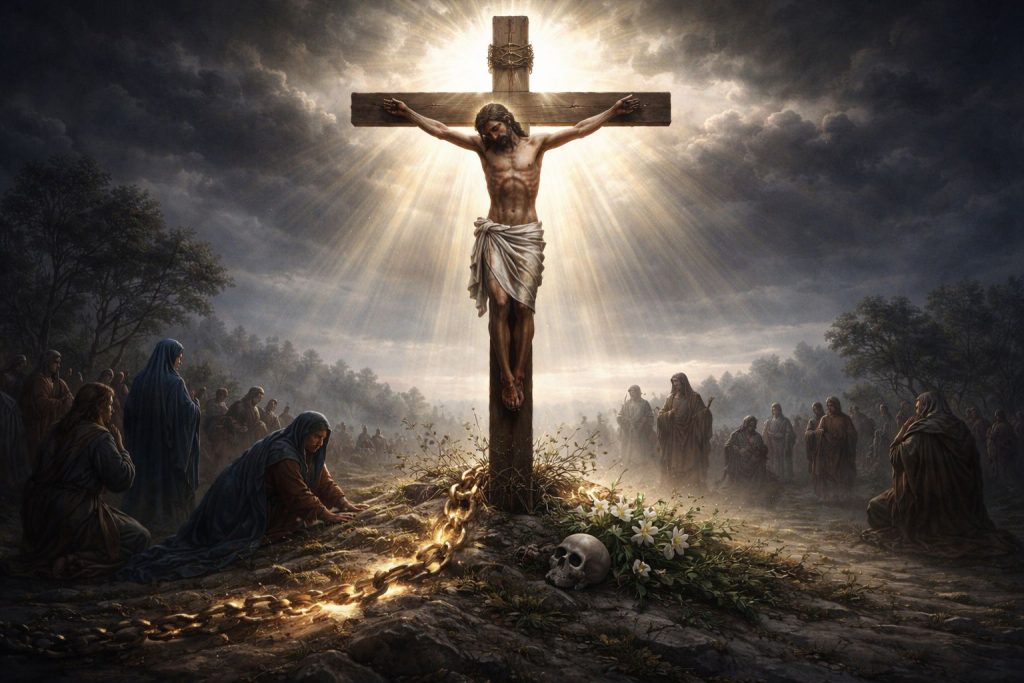
In the ancient Roman world, the cross was a symbol of humiliation and disgrace. It was meant to erase dignity and instill fear. Yet God transformed this instrument of shame into a sign of glory. Isaiah foretold this paradox: “See, my servant shall prosper; he shall be exalted and lifted up” (Isaiah 52:13).
On first Good Friday, the Cross of Calvary became a throne. Jesus reigns not by power, but by love; not by domination, but by self-giving sacrifice.
What the world rejects, God glorifies. What humanity discards, God redeems.
God can transform even the most shameful parts of our lives into channels of grace.
CONCLUSION: ALLOWING GOD TO RECYCLE OUR LIVES
Beloved in Christ, the message of Good Friday is both profound and deeply personal:
- Our sins can be recycled into forgiveness
- Our suffering can be recycled into redemption
- Our death can be recycled into eternal life.
But this transformation is not automatic. Like recyclable material, we must be placed into God’s hands. We must surrender our sins, our pains, and our failures to Christ crucified.
Today, let us not only venerate the Cross, let us entrust our lives to Christ crucified.
For on His Cross, nothing is wasted. In Christ, everything — even sin, suffering, and death — can be recycled into grace, healing, and life eternal.
“We adore you, O Christ, and we bless you, because by your holy Cross, you have redeemed the world.” Amen!
By Most Rev. John Kobina Louis