CONGRESS OF REGIONAL CONFERENCE OF MAJOR SUPERIORS OF WEST AFRICA & AFRICA RELIGIOUS UNION- GHANA AT CHRISTIAN VILLAGE, KUMASI, GHANA
HOMILY AT HOLY MASS ON SATURDAY MARCH 14, 2026
THEME: “PRAYER IN THE LIFE OF CONSECRATED WOMEN AND MEN”
READINGS: HOSEA 6:1–6; LUKE 18:9–14
- INTRODUCTION
Dear Sisters and Brothers in Consecrated Life across West Africa,
The Word of God today invites us to reflect deeply on the place of prayer in our lives as consecrated women and men.
- THE THEME OF PRAYER IN TODAY’S READINGS
In the first reading, the prophet Hosea conveys God’s heartfelt desire: “For I desire steadfast love and not sacrifice, the knowledge of God rather than burnt offerings” (Hos 6:6). God is not primarily looking for external acts of religion; He desires a genuine relationship with Him.
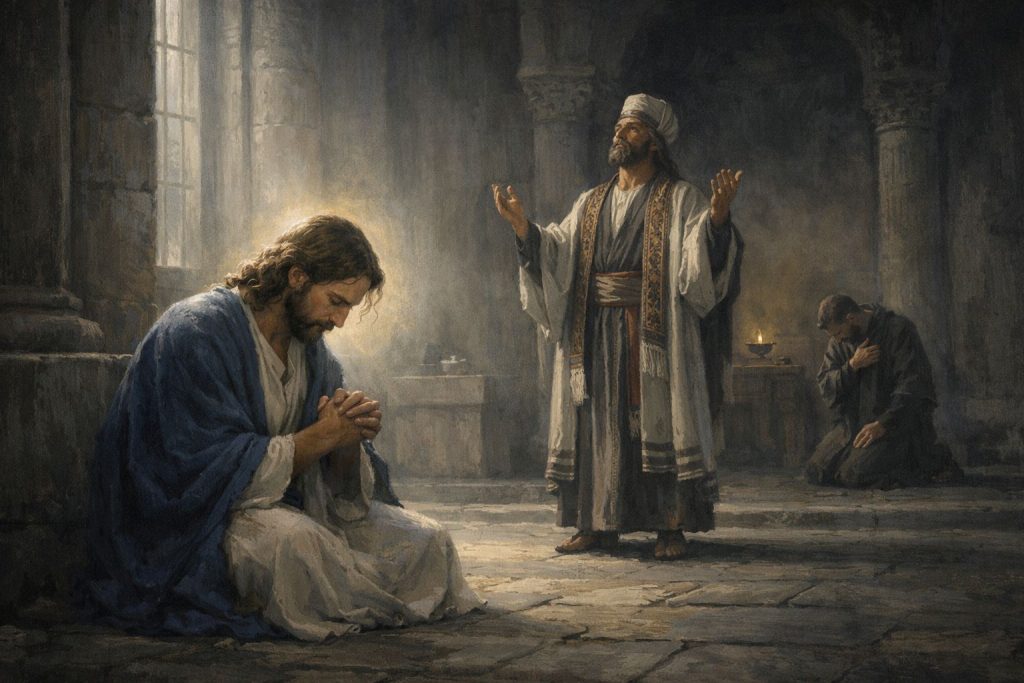
And today’s gospel reading presents the parable of the Pharisee and the tax collector (Luke 18:9–14). Two men go up to the temple to pray, yet only one returns home justified. The difference between them lies not in their location, posture, or words—but in the disposition of the heart.
For us who have consecrated our lives to God, prayer is not simply one activity among many. Prayer is the lifeblood of consecrated life. Without it, apostolates become empty activism, community life becomes routine, and vows become burdens instead of gifts.
- AVOIDING PRAYING TO ONESELF LIKE THE PHARISEE
In the Gospel, Jesus describes the Pharisee who prayed and “spoke this prayer to himself” (Luke 18:11). This detail is striking. Although he seemed to be addressing God, in reality he was praying to himself. His prayer was full of self-reference: “I thank you that I am not like other people… I fast… I give tithes…”
His prayer became a mirror in which he admired himself, rather than a window through which he encountered God.
This is a subtle temptation for all who are devoted to religious practices. Consecrated persons pray frequently—Mass, Liturgy of the Hours, meditation, devotions. Yet it is possible to perform prayer externally while the heart is turned inward toward self-satisfaction.
When prayer becomes a rehearsal of our achievements—our ministries, our sacrifices, our fidelity—we risk losing the humility that makes prayer authentic.
The tax collector, on the other hand, stood at a distance and prayed simply: “God, be merciful to me, a sinner.” His prayer was short, but it was true. And Jesus tells us: “This man went home justified rather than the other.”
For consecrated women and men, the lesson is clear: the All-Holy God is the Object of true prayer; and so, it begins with humility.
- PRAYER AS FILIAL COMMUNICATION WITH GOD
At its heart, prayer is filial communication with God.
We can compare prayer to the relationship between a child and a loving father. A healthy relationship between a child and a father depends on communication—speaking, listening, trusting, and sharing. If a child stops communicating with his father, the relationship weakens. In the same way, when we neglect prayer, our relationship with God suffers.
Consecrated life is fundamentally a relationship of love with God. Prayer is the conversation that keeps that relationship alive.
Like a child speaking to his/her father or the repentant prodigal son returning to his father, the tax collector approached God with humility, trust, simplicity and sincerity: “God, be merciful to me, a sinner.”
Similarly, when consecrated persons pray with humility, trust, simplicity and sincerity, prayer becomes not just an obligation but a living encounter with God, our Loving Father.
- CONCLUSION
Dear Sisters and Brothers,
The readings today remind us that God desires hearts, not merely rituals.
As consecrated women and men called to serve the Church in West Africa, our ministries will bear fruit only if they flow from deep, authentic prayer.
Therefore, on the one hand, let’s guard against the danger of praying to ourselves, like the Pharisee who admired his own virtue.
On the other hand, let our prayer resemble that of the tax collector— like the trusting conversation of a child with a loving Father — humble, simple, sincere, and directed entirely toward God.
Amen.
By Most Rev. John Kobina Louis