THEME: SEEK RIGHTEOUSNESS AND HUMILITY
Readings: Zephaniah 2:3; 3:12–13 / 1 Corinthians 1:26–31 / Matthew 5:1–12
4th Sunday in Ordinary Time
INTRODUCTION
Beloved in Christ, the Word of God today speaks to us with clarity and urgency: “Seek righteousness, seek humility” (Zephaniah 2:3). These simple yet powerful words of the prophet Zephaniah are not just a message for ancient Judah—they are a call addressed directly to our hearts today.
In a world that often celebrates power, pride, and self-sufficiency, God invites us to walk a very different path. Jesus, in the Beatitudes, expands this invitation and shows us what righteousness and humility look like in everyday life. They are not abstract ideals; they are attitudes of the heart that shape how we live, love, and hope.
1. TWO FOUNDATIONAL VIRTUES
During the time of the prophet Zephaniah, the people of Judah had drifted far from God. Many had abandoned His commandments and turned to false gods. Pride replaced trust, and self-interest replaced obedience. As a result, destruction loomed.
While the majority of the people of Judah would experience the consequence of their unfaithfulness to God, there was hope for a remnant. They would be spared not because of their power or numbers, but because they were righteous and humble. They were righteous because they remained faithful to God’s ways. They were humble because they knew they depended entirely on Him.
The same is true today. God is looking for hearts that are faithful and humble—hearts willing to seek Him sincerely.
2. THE CALL TO RIGHTEOUSNESS
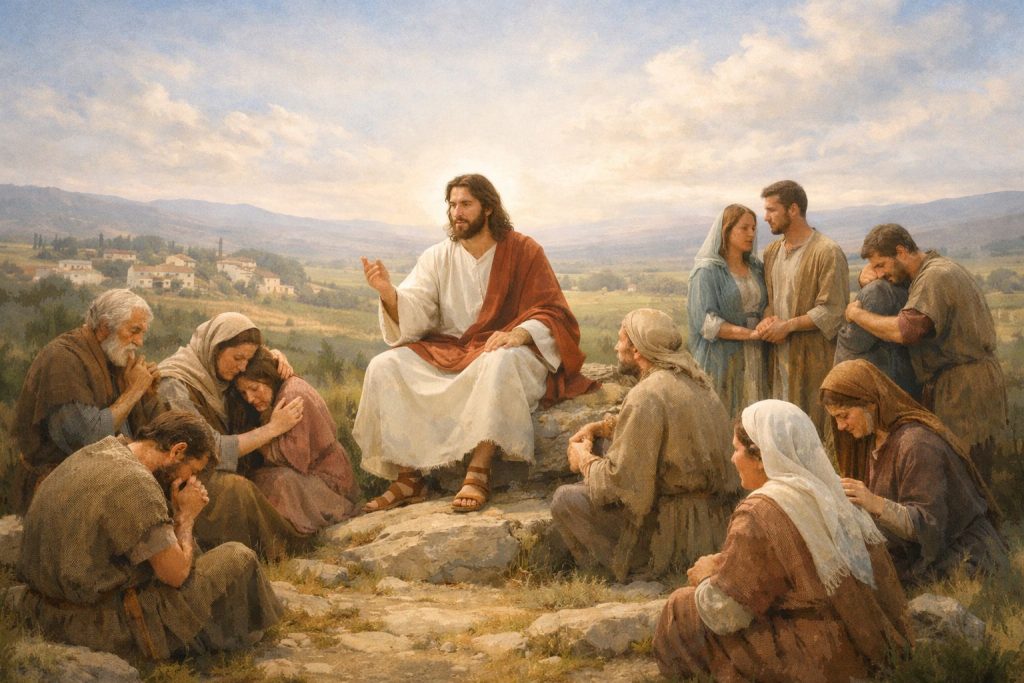
In the Gospel, Jesus describes the righteous through several of the Beatitudes.
The righteous, He tells us, hunger and thirst for righteousness. This is not a casual desire but a deep, burning longing for what is good, just, and holy. Such people do not settle for injustice or moral compromise; they actively work to make God’s will a reality in the world.
The righteous are also pure in heart. Their faith is not superficial. They seek God sincerely, worship Him truthfully, and strive to align their lives with His commandments.
Furthermore, the righteous are peacemakers. They do not inflame conflicts or sow division; instead, they build bridges, heal wounds, and promote harmony—because they see every person as a child of God.
Finally, the righteous remain faithful to Christ even when it costs them something. They may face misunderstanding, rejection, or persecution—but they endure with courage, trusting that God sees and rewards their faithfulness.
However, Jesus warns us implicitly of a danger: righteousness must never turn into self-righteousness. When virtue is mixed with pride, it loses its beauty. That is why righteousness must always walk hand in hand with humility.
3. THE POWER OF HUMILITY
Humility is not weakness; it is spiritual strength.
Jesus begins the Beatitudes by blessing the poor in spirit—those who know that without God they can do nothing. Whether rich or poor, such people recognize their total dependence on the Lord.
The humble also mourn over evil. They are not indifferent to sin, suffering, or injustice in the world. Their hearts ache because God’s will is not yet fully realized on earth.
The humble are meek—gentle, patient, slow to anger. They choose love over violence, restraint over revenge.
And because they know how much mercy they themselves need, the humble become merciful. They forgive, they show compassion, and they give others another chance.
Humility protects righteousness. It keeps us grounded, teachable, and open to God’s grace.
4. INHERITING THE EARTH
Jesus promises: “Blessed are the meek, for they shall inherit the earth” (Matt. 5:4). This echoes the experience of the righteous and humble remnant who inherited the land in Zephaniah’s time.
History shows us that violence and arrogance have never truly secured lasting peace. From Cain onward, the violent have tried—and failed—to possess the earth. The future belongs not to the powerful, but to the meek and the righteous.
This vision may seem ideal, but it begins with us. Our families, our communities, our workplaces, and our nations would be transformed if we chose righteousness and humility.
Many broken marriages could have been healed. Many divided communities could have been united. Many nations could have known peace—if humility and righteousness had prevailed.
Yet it is never too late. With God’s grace, what has been damaged can be rebuilt. What has been broken can be restored.
5. INHERITING THE KINGDOM OF HEAVEN
Above all, Jesus assures us that the righteous and the humble will inherit something far greater than the earth: the Kingdom of Heaven.
“Blessed are the poor in spirit, for theirs is the Kingdom of Heaven” (Matt. 5:3). God promises eternal riches to those who place their trust in Him rather than in themselves.
Let us, therefore, take Jesus at His word: seek first the Kingdom of God and His righteousness, and everything else we truly need will be given to us (cf. Matt. 6:33)..
CONCLUSION
Beloved, today the Lord invites us to choose a way of life:
- To seek righteousness by hungering for justice, purity of heart, peacemaking, and faithful endurance.
- To seek humility by being poor in spirit, meek, merciful, and sorrowful over evil.
If we walk this path, God Himself will be our reward—both now and forever in His Kingdom.
May the Lord grant us the grace to seek righteousness and humility every day of our lives. Amen.
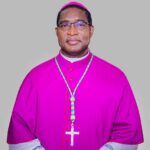
By Most Rev. John Kobina Louis