THEME: THE WORD OF GOD DWELLS AMONG YOU (COL. 3:16)
READINGS: Isaiah 8:23-9:3/ 1 Cor. 1:10-13,17/ Matthew 4:12-23
3rd Sunday in Ordinary Time & Sunday of the Word of God
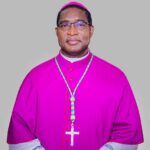
Homily by Bishop John K. Louis during his Canonical Visit to St. Paul’s Catholic Seminary, Sowutuom, Accra, on 25th January, 2026
Introduction
Very Reverend Rector, Reverend formators, other staff members, and dear seminarians, today’s celebration is rich with meaning and grace. Two celebrations converge today: the Feast of the Conversion of St. Paul, our patron, and the Sunday of the Word of God. This is not a coincidence; it is a divine convergence.
The seminary exists so that the Word of God may first dwell deeply in those who are being formed, before they proclaim to the world. St. Paul himself is a living proof that when the Word of God truly dwells in a person, it transforms not only the individual but also the course of history.
Providentially, the theme for this year’s Sunday of the Word of God is chosen from one of the epistles ascribed to St. Paul: “The Word of God dwells among you” (Col. 3:16). Where the Word of God is welcomed, light breaks forth; where it is ignored, darkness remains.
1. God’s Word as Light among Us
Darkness is the setting of today’s readings, but light is the message. The Psalmist says: “Your word is a lamp to my feet and a light to my path” (Psalm 119:105). Here, the spoken or written Word of God is seen as light. In Scriptures, light is more than brightness. It represents God’s presence, truth, and saving power. In contrast, darkness represents the absence of God, ignorance, fear, confusion, suffering, and sin.
In the New Testament, there is a deeper and ultimate revelation of the Word of God. Jesus Christ, God’s only begotten Son, is the very Word of God through Whom everything was created (cf. John 1:1-3). He is also the Light of the world (cf. John 1:4-9; 8:12; 9:5). And He has come to live among us (cf. John 1:14).
Thus, when Christ our Light began His ministry in the territory of Zebulun and Naphtali, St. Matthew would see the fulfillment of a prophecy of the prophet Isaiah: “The people who walked in darkness have seen a great light” (Isa. 9:2; Matt. 4:12-16). Christ’s presence, His preaching, and His call transform ordinary lives — fishermen would become ardent fishers of souls.
This same Word dwells among us here—in this seminary chapel, grotto, lecture rooms, library, refectory, halls, etc. He dwells among us when Scripture is proclaimed in the liturgy, studied in theology, prayed in lectio divina, and lived in community. Dear seminarians welcome the Word, so that His Light may transfigure your hearts!
2. The Light of God’s Word Overcomes the World’s Darkness
From the very beginning of creation, light and the Word go together. In Genesis, God speaks, “Let there be light”, and darkness is pushed back (Gen.1:3-5). Creation itself begins with God’s Word overcoming chaos.
In Isaiah’s time, Assyrian oppression brought the gloom of fear and humiliation to Israel, but God promised the light of hope and joy. In the time of Jesus, the people lived under Roman occupation, spiritual hunger, and moral confusion. Again, God’s Word broke through the darkness—this time not only spoken, but made flesh.
And today, brothers and sisters, the darkness continues in new forms: wars, violence, injustice, immorality, corruption, division, despair, loss of faith, etc. Yet the truth remains the same: darkness has never overcome the Word of God. Whenever the Word is proclaimed and Jesus is wholeheartedly embraced, light returns.
3. The Light of God’s Word Overcomes Darkness in Saul’s Life
Today we celebrate the dramatic moment when the light of God’s Word shattered the darkness in the life of Saul of Tarsus (cf. Acts 9:3). Saul was not ignorant of the Hebrew Scripture. He knew the Law. Yet his knowledge lacked encounter. On the road to Damascus, the Word did not come to him as an argument, but as a Person, addressing him:
“Saul, Saul, why are you persecuting me?” (Acts 9:4)
That question changed everything. The persecutor became the apostle. The man who caused division became a preacher of unity. The one blinded by zeal was given true sight by grace. Saul’s conversion reminds us that formation is not merely intellectual or disciplinary; it is fundamentally a conversion of the heart through encounter with Christ, the living Word.
4. Allowing God’s Word to Dispel Darkness in Our Personal Lives
Dear seminarians and staff, the road to Damascus is not only in history; it runs through each of our lives.
Personal darkness can take many forms:
- fear of inadequacy or failure,
- pride disguised as ambition,
- hidden resentment or rivalry in community life,
- spiritual routine without interior fire,
- resistance to correction or authentic obedience,
- distraction that dulls prayer and love for Scripture.
The Word of God dispels these dark shadows when we allow Him to:
- question us, as it questioned Saul,
- challenge our false securities,
- heal our inner blindness,
- shape our identity, not as self-made individuals but as servants of God.
To let the Word dwell among us richly means allowing it to judge, console, correct, and transform us—daily, patiently, and humbly.
Conclusion
Beloved in Christ, on this feast of our patron, Saint Paul, and on this Sunday of the Word of God, we are reminded that the future of the Church depends on people in whom the Word of God truly dwells.
May this seminary always be a place where:
- the Word is revered
- the Word is studied
- the Word is prayed
- Christ is encountered, and
- the Word is lived.
Finally, like St. Paul, may we allow the light of Christ to overcome every darkness within us, so that one day we may proclaim with conviction: “It is no longer I who live, but Christ who lives in me” (Gal. 2:20).
Amen.