THEME: THE WORD OF GOD DWELLS AMONG YOU (COL. 3:16)
READINGS: Isaiah 8:23-9:3/ 1 Cor. 1:10-13,17/ Matthew 4:12-23
3rd Sunday in Ordinary Time & Sunday of the Word of God
Introduction
Beloved in Christ, today’s celebration is rich and providential. We mark the Sunday of the Word of God, a day Pope Francis set aside to renew our love for the Divine Word. This year, the celebration of God’s Word falls on the Feast of the Conversion of St. Paul, one of the greatest witnesses to the power of God’s Word.
The theme which Pope Leo XIV has approved for today’s celebration is: “The Word of God dwells among you” (Col. 3:16). This reminds us of a truth about God’s presence and action in history and in our lives. God’s Word is not distant or silent. It is living, active, and powerful. Today’s readings converge on this truth: where the Word of God is welcomed, light breaks forth; where it is ignored, darkness remains.
1. God’s Word as Light among Us
“Your word is a lamp to my feet and a light to my path” (Psalm 119:105). Here, the Psalmist refers to the spoken and written Word of God as light. In the Bible, light is more than brightness; it represents God’s presence, truth, and saving power. In contrast, darkness represents the absence of God, ignorance, fear, confusion, suffering, and sin.
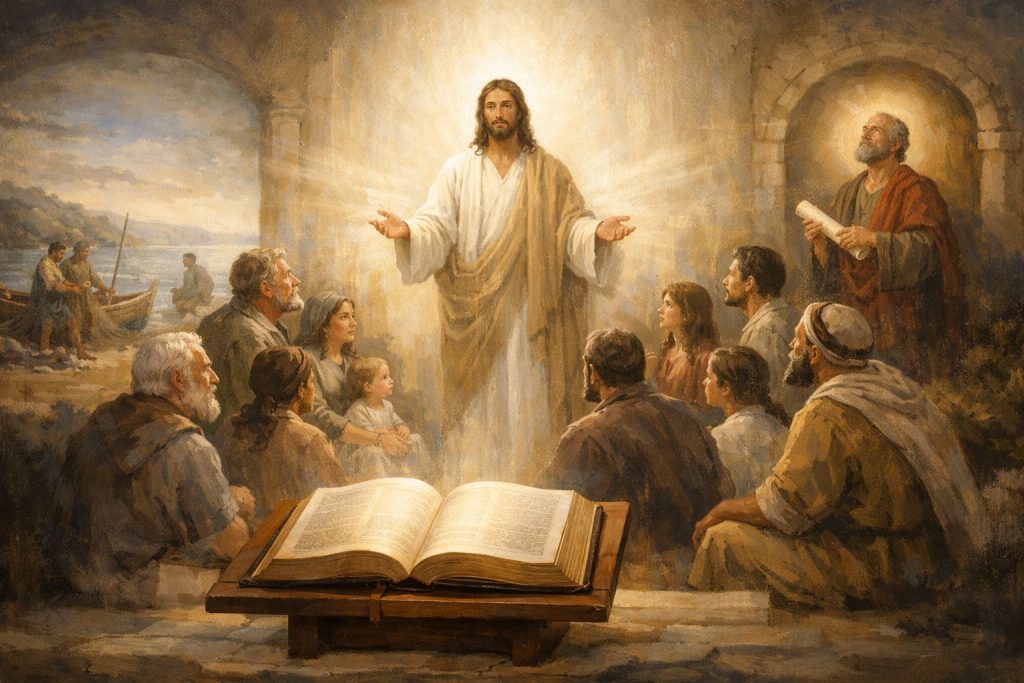
In the New Testament, there is a deeper and ultimate revelation of the Word of God. Jesus Christ, God’s only begotten Son, is the very Word of God through Whom everything was created (cf. John 1:1-3). He is also the Light of the world (cf. John 1:4-9; 8:12; 9:5). And He has come to live among us (cf. John 1:14).
Thus, when Christ our Light began His ministry in the territory of Zebulun and Naphtali, St. Matthew would see the fulfillment of a prophecy of the prophet Isaiah: “The people who walked in darkness have seen a great light” (Isa. 9:2; Matt. 4:12-16). Christ’s presence, His preaching, and His call transform ordinary lives — fishermen would become ardent fishers of souls. This same Word now dwells among us— in the Scriptures, sacraments, Church, homes, community, neighbour, and in our hearts.
2. The Light of God’s Word Overcomes the World’s Darkness
From the very beginning of creation, light and the Word go together. In Genesis, God speaks, “Let there be light”, and darkness is pushed back (Gen.1:3-5). Creation itself begins with God’s Word overcoming chaos.
In Isaiah’s time, Assyrian oppression brought the gloom of fear and humiliation to Israel, but God promised the light of hope and joy. In the time of Jesus, the people lived under Roman occupation, spiritual hunger, and moral confusion. Again, God’s Word broke through the darkness—this time not only spoken, but made flesh.
And today, brothers and sisters, the darkness continues in new forms: wars, violence, injustice, corruption, division, despair, loss of faith, etc. Yet the truth remains the same: darkness has never overcome the Word of God. Whenever the Word is proclaimed and Jesus is wholeheartedly embraced, light returns.
3. The Light of God’s Word Overcomes Darkness in Saul’s Life
Today’s feast gives us a powerful personal example: Saul of Tarsus. Saul was zealous, educated, and religious, yet spiritually blind. He believed he was serving God while persecuting the Church. Then, on the road to Damascus, Christ the light of God flashed over Saul’s spiritual darkness (cf. Acts 9:3). He would realize that it was Christ he was persecuting (cf. Acts 9:4).
That encounter changed everything. The light of God’s Word did not destroy Saul; it converted him. His blindness became sight. His hatred became love. His violence became mission. Saul became Paul, the great apostle who would later say: “Faith comes from what is heard, and what is heard comes through the Word of Christ” (Romans 10:17).
Paul’s conversion reminds us that no darkness is too deep for the light of God’s Word.
4. Allowing God’s Word to Dispel Darkness in Our Personal Lives
Beloved, the Word of God does not only speak to nations and saints; it speaks to each one of us. Personal darkness can appear as: fear about the future, hatred or unforgiveness, habitual sin, discouragement in prayer, division in Church, families and communities, lack of trust in God, etc.
The Word of God dispels this darkness when we:
- listen to it regularly, not only on Sundays
- pray with it, allowing Jesus to question and heal us, as St. Paul experienced
- live it, especially in love, forgiveness, and unity.
Saint Paul warns the Corinthians about division, asking, “Is Christ divided?” (1 Cor. 1:13). When we allow the Word to dwell richly in us, it unites us instead of dividing us, and it brings clarity where there is confusion.
Conclusion
Beloved, today we rejoice because the Word of God truly dwells among us. From creation to the Psalmist, from Isaiah to Jesus, from Saul to Paul, and from the early Church to our parish/community today, the message is the same: the light of God’s Word always overcomes darkness.
May we not allow the Bible to remain closed or unheard. Let us open our hearts so that Christ the Word may dwell in us richly, transform us deeply, and make us bearers of light in a world that longs for hope.
Amen.
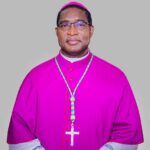
By Most Rev. John Kobina Louis