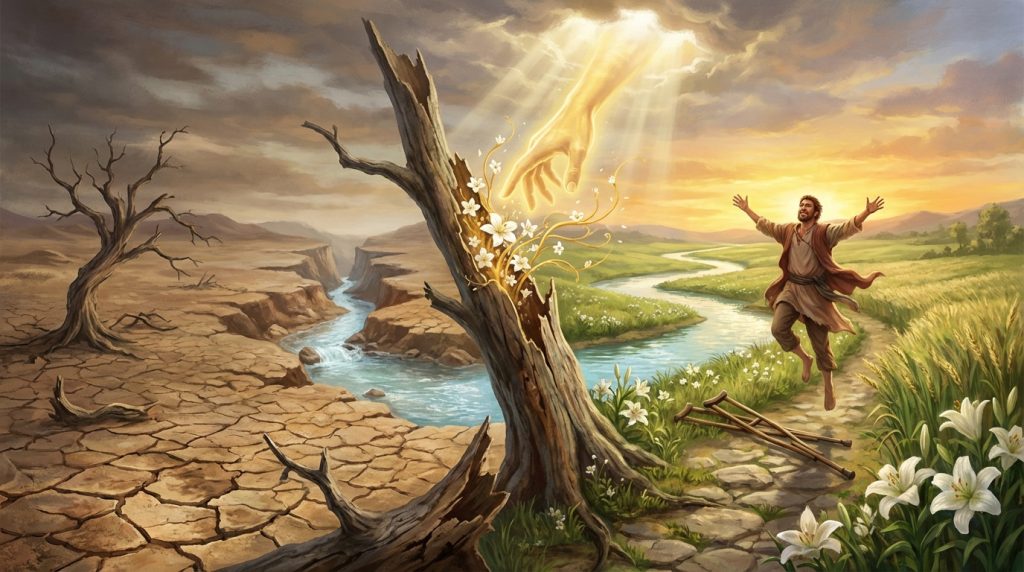
THEME: CHRIST RESTORES AND TRANSFORMS US
Readings: Isaiah 35:1-6,10/ James 5:7-10/ Matthew 11:2-11
3rd Sunday of Advent, Year A (2025)
1. Introduction
As we approach the joy of Christmas, we are invited to reflect on the restoration and transformation that Christ brings into our lives. Through the prophet Isaiah, the apostle James, and the words of Jesus in Matthew’s Gospel, we are reminded that Christ is the fulfillment of God’s promise to restore and transform us.
2. Restoration and Transformation
Let us first consider these two key terms: “restoration” and “transformation”. Restoration refers to bringing something back to its original state or to a condition of wholeness that was once lost. It’s the process of healing or repair.
Transformation, on the other hand, goes a step further. It is not merely restoring something to its original state. It is changing it into something new. Transformation is a profound change that brings about renewal and growth.
In today’s second reading, the apostle James gives us an apt metaphor for understanding these two processes: “The farmer waits for the precious fruit of the earth, being patient with it until it receives the early and the late rains” (James 5:7).
The farmer doesn’t just plant seeds and hope for immediate results. First, there is the process of restoring the land for fruitfulness: the land must be prepared, the soil must be fertile again, and the seeds must be watered. This is where healing or recovery take place. But then comes the transformation: over time, those seeds grow and change, blossoming into fruit-bearing plants. The transformation is visible and evident in the form of the harvest. So, restoration is the first step, but transformation is the final goal.
3. The Promise of Restoration and Transformation in Isaiah 35
The prophecy of Isaiah 35 also paints a picture of restoration and transformation. Firstly, the prophet speaks of the blind seeing, the lame leaping, etc. — symbols of the restoration of humanity which has been devastated by sin and suffering.
Secondly, the prophet speaks of a transformation: “the desert shall rejoice and blossom” (Isaiah 35:1). That is, a world that was once barren will now become lush and fruitful. The transformation is not just about physical healing but also about a spiritual renewal—God’s people will be transformed into those who rejoice and experience the fullness of life with God.
4. Christ Fulfills the Promise of Restoration and Transformation
In Matthew 11:2-11, when John the Baptist, in prison and suffering, sends his disciples to ask Jesus, “Are you the one who is to come, or should we look for another?” Jesus responds with evidence of His mission: the blind see, the lame walk, the lepers are cleansed, the deaf hear, and the poor have good news brought to them. Jesus points directly to the very signs Isaiah prophesied about. He is the fulfillment of the promise of restoration and transformation. His ministry is the outpouring of God’s kingdom breaking into the world. In Christ, we see the blind receiving both physical sight and spiritual understanding. The lame are not only healed in body but are made whole in soul. Christ’s transformative power isn’t just for the physical realm; it is for the healing of hearts, minds, and relationships.
Throughout the New Testament, this theme of restoration and transformation continues. Jesus brings the dead to life, restores sinners, and transforms the hearts of His followers. The apostle Paul says, “If anyone is in Christ, he is a new creation. The old has gone, the new has come” (2 Cor. 5:17). Christ’s work is not just to fix what is broken but to make us new, to transform us to become like Him.
5. How to Enjoy Restoration and Transformation in Christ
So how can we experience this restoration and transformation in our own lives? First, we must recognize our need for healing. In our busy world, it’s easy to ignore the places where we are broken—whether in our bodies, our relationships, or our hearts. But Christ comes to those who acknowledge their need for Him. He meets us where we are, offering healing and wholeness.
Second, we must be open to the transforming power of the Holy Spirit. Just as Jesus touched the lives of those around Him, He continues to work in us through the Spirit. This involves cooperating with God’s grace, allowing Him to shape our thoughts, words, and actions. We must take time to reflect, pray, and ask for His transformative work in our lives.
Thirdly, we must be patient. As James 5:7 reminds us, we are to “be patient … until the coming of the Lord.” Restoration is often a gradual process; and transformation takes time. Just as a farmer waits for the crops to grow, we must wait for God’s work to unfold in our lives, trusting that He is faithful to complete it.
6. Conclusion
Beloved, today, we are called to rejoice in the promise that Christ restores and transforms. In Him, we have a hope that is both future and present—a hope that one day, all things will be made new, and in the meantime, He is with us, healing and transforming our lives. As we prepare to celebrate His coming, let us open our hearts to the restoration and transformation He offers, and allow Him to work in us, so that we too may be witnesses of His healing power in the world.
Amen.
By Most Rev. John Kobina Louis